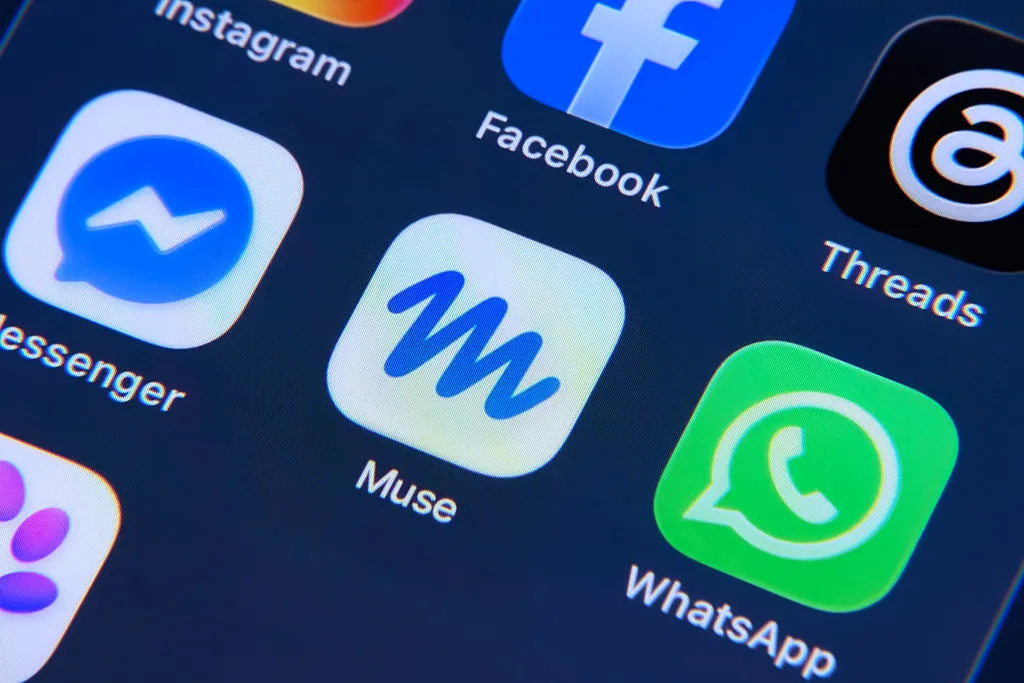
Meta's AI assistant app Muse reached 10.9 million U.S. downloads in its first 40 days after launching in September, making it only the 12th app ever to achieve this milestone, according to market intelligence firm Sensor Tower.
Only 11 other apps have matched this speed. Meta's own Threads reached the threshold in July 2023. Most other apps that achieved similar velocity were mobile games, Sensor Tower Senior Insights Analyst Kara Lee said.
Meta leveraged its existing user base to drive Muse adoption. The company markets the app across Facebook and Instagram, which together reach 3.6 billion daily active users. Muse also benefited from aggressive paid advertising. Meta allocated 39% of its total October ad spend to promote Muse, up from 23% in September. Muse ranked as the 21st largest U.S. brand by advertising impressions in October, climbing from 73rd in September.
Muse's performance outpaced rival AI apps in early adoption and retention. The app achieved a 30% retention rate after 7 days and 23% after 14 days among U.S. users. ChatGPT, Claude, and Grok averaged 19% and 16% retention rates at those intervals. ChatGPT saw only 3.7 million U.S. downloads in its first 40 days. Grok and Claude recorded 500,000 and 200,000 respectively.
Globally, ChatGPT achieved approximately 15 million downloads in the same timeframe, but the comparison differs in scope. Muse is currently available only in the U.S. and Canada, while ChatGPT launched with worldwide availability. Japan alone accounted for 25% of ChatGPT's initial installs.
Muse reached 2.5 million daily active users on October 16, marking a 15% week-over-week increase. The app held the No. 1 ranking on the U.S. App Store for all days except October 19, when streaming platform Kick briefly displaced it. Muse has maintained the top position on Google Play over the past 30 days.
The app performs various tasks on users' behalf and initially ranked higher than ChatGPT did at equivalent launch stages. Its retention advantage over competitors suggests users engage more regularly with Muse than with alternative AI assistants, though how sustained this engagement remains beyond the initial period remains unclear.