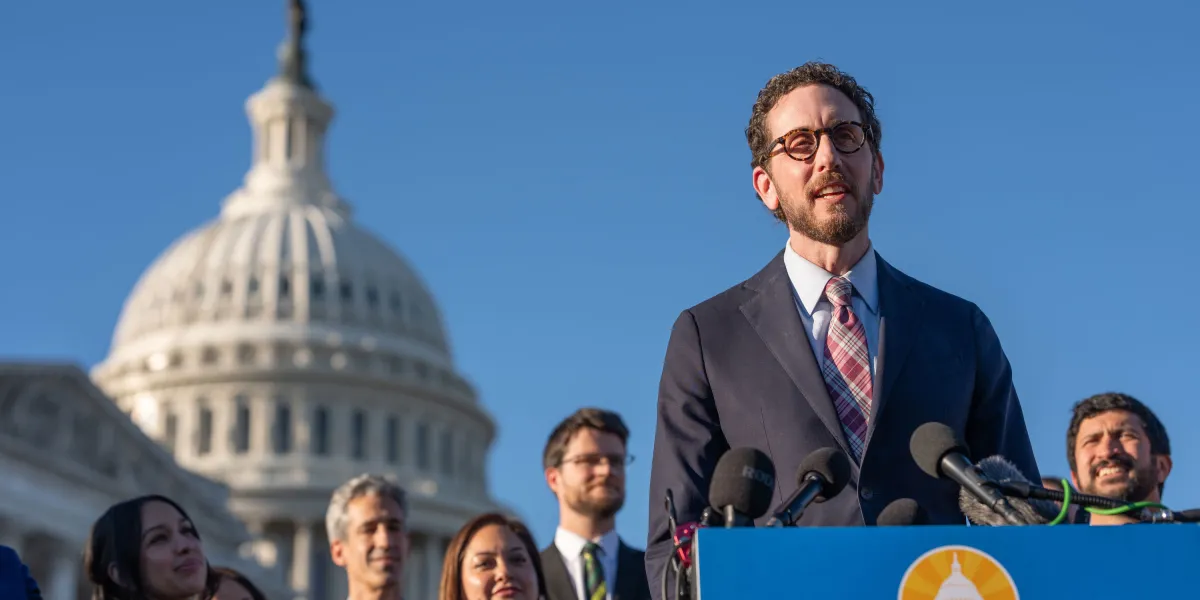
Scott Wiener, a California state senator who won a tight congressional race for former Speaker Nancy Pelosi's open San Francisco seat, could play a key role in federal AI policy, according to MIT Technology Review. Wiener told the publication on Friday, hours after being declared the winner, that he hoped Congress would "take decisive action before [the end of] this year." He said, "That does not appear to be happening."
Wiener cited a report released the previous day by the AI nonprofit METR, which was widely interpreted as evidence that Anthropic had achieved recursive self-improvement. Wiener called the report "very concerning." He said, "We need to slow this down. Because it's moving very quickly, and we could sleepwalk into a disaster."
As a state senator, Wiener authored SB 1047 in 2024, which California Governor Gavin Newsom vetoed. Wiener then sponsored SB 53, a lighter-touch bill that Newsom signed. The source says both bills have inspired proposed federal legislation.
Wiener's campaign received over $3 million from Public First Action, a nonprofit that supports AI regulation and receives substantial funding from Anthropic. Opponents criticized him for being too close to the AI industry. Wiener rejected that claim, saying the attacks were "shockingly cynical."
Wiener said he would be eager to serve on a select committee on artificial intelligence if Congress forms one. He backed a "strong, empowered, nimble federal regulator," whistleblower protections, testing and auditing requirements, and a kill switch requirement. He opposes broad federal preemption of state AI laws. He described himself as "cautiously optimistic" about Congress's ability to regulate AI, citing concerns about getting legislation past President Donald Trump.