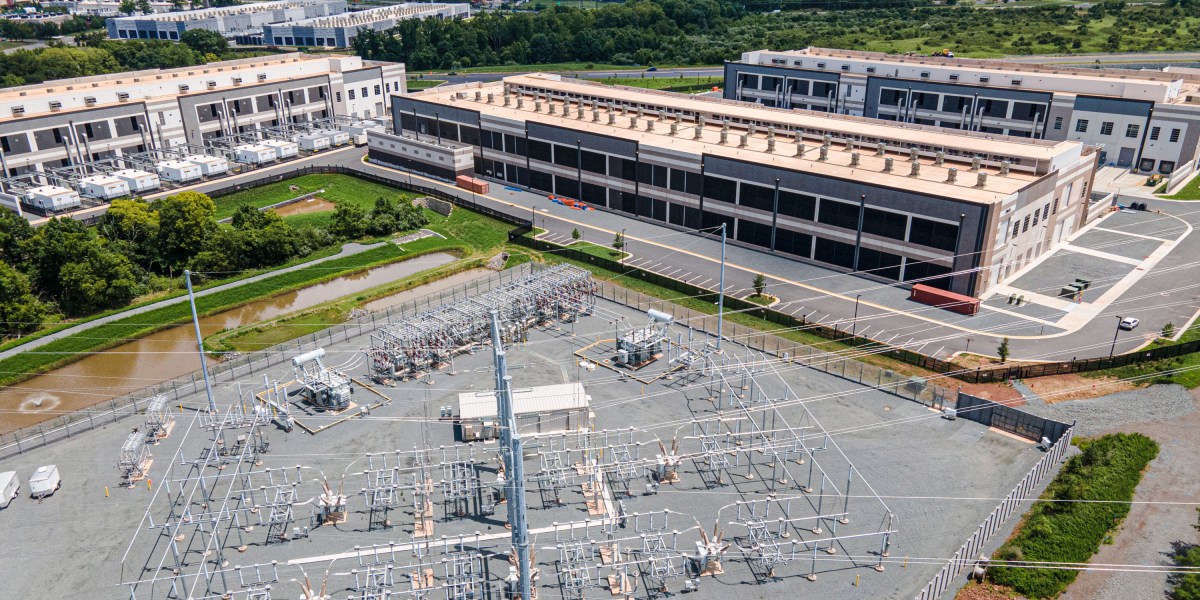
The MIT Technology Review piece argues that the backlash against data centers is driven largely by electricity rather than a broader culture war, as Big Tech has suggested. The author reported from Ashburn, Virginia, part of what the article calls Data Center Alley, and says the facilities there are mostly connected to the existing grid.
The author cites OpenAI's chief global affairs officer, Chris Lehane, who wrote two days after the midterms that data centers "have become a proxy for public unease about affordability, corporate power, and people losing control over their futures." The author says spending time in Data Center Alley left them unconvinced that this framing is accurate.
According to the article, data centers in Loudoun County are mostly served by the local utility, Dominion Energy, much of which is generated by natural gas. The average data center there has a power capacity of 54 megawatts. Elena Schlossberg, an activist against data centers in Virginia, told the author that the fight "was always about power," meaning electricity.
The article reports that recent protests led Virginia to adopt rules requiring data centers to pay fully for new transmission lines to the grid. Developers told the author they expect new rules that would cut them off from grid power during peak demand. Schlossberg worries that a strained grid could lead to more diesel generator use or expanded fossil fuel generation.
Many AI data centers elsewhere in the country are being built in rural areas without nearby grid infrastructure, the article says. These companies plan to generate their own power with natural-gas turbines, a model the article describes as "behind the meter." The article reports that Anthropic has reportedly agreed to pay $3.4 billion for gas turbines. It also says the Environmental Protection Agency found that Elon Musk violated air quality laws while setting up turbines to power a data center in Memphis.
The article states that the smallest data centers attractive for AI training draw 300 megawatts, and ideal facilities draw about 6,000 megawatts, a figure the author compares to the estimated draw of Chicago.
The author argues that onsite generation at this scale affects surrounding communities, which have traditionally had a say in where major utility infrastructure is built. The article also notes that fears of job losses, existential risks, concentrated corporate power and misinformation contribute to the opposition.