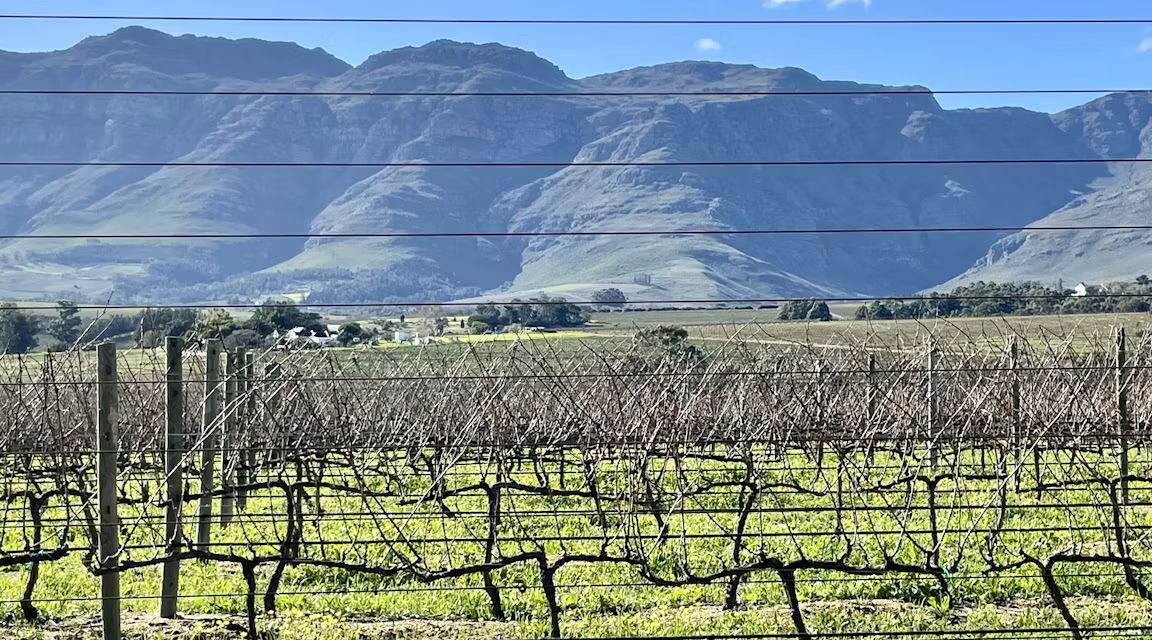
Winemakers in South Africa's Western Cape are adopting conservation practices to adapt to drought, heat and erratic rainfall, according to a research team of geographers and sustainability scientists. The team interviewed growers, conservation practitioners and wine industry experts, and analyzed 107 vineyards, about 20 percent of the total.
The researchers wrote that many growers see long-term stewardship and conservation of soil and wildlife habitat as essential to business success. Practices they described include restoring native vegetation along waterways, removing alien species, planting cover crops between vine rows, composting and mulching, and reducing chemical pesticide use through closer pest monitoring and encouraging beneficial insects.
The researchers said temperatures in the region have risen 1.5 to 2 times faster than the global average over the past five decades. They also said three years of severe drought in the late 2010s reduced grape production. The source says the area under vineyard production in South Africa has decreased, and that some growers are diversifying their businesses or switching crops.
According to the report, the majority of South Africa's vineyards participate in the Integrated Production of Wine certification system, created in 1998, which sets standards for pesticide use, water management and wastewater treatment.
The researchers said some growers described rising costs for exports, labor and chemicals, and said these practices help keep their vineyards productive. The report does not quantify the financial returns from these practices.