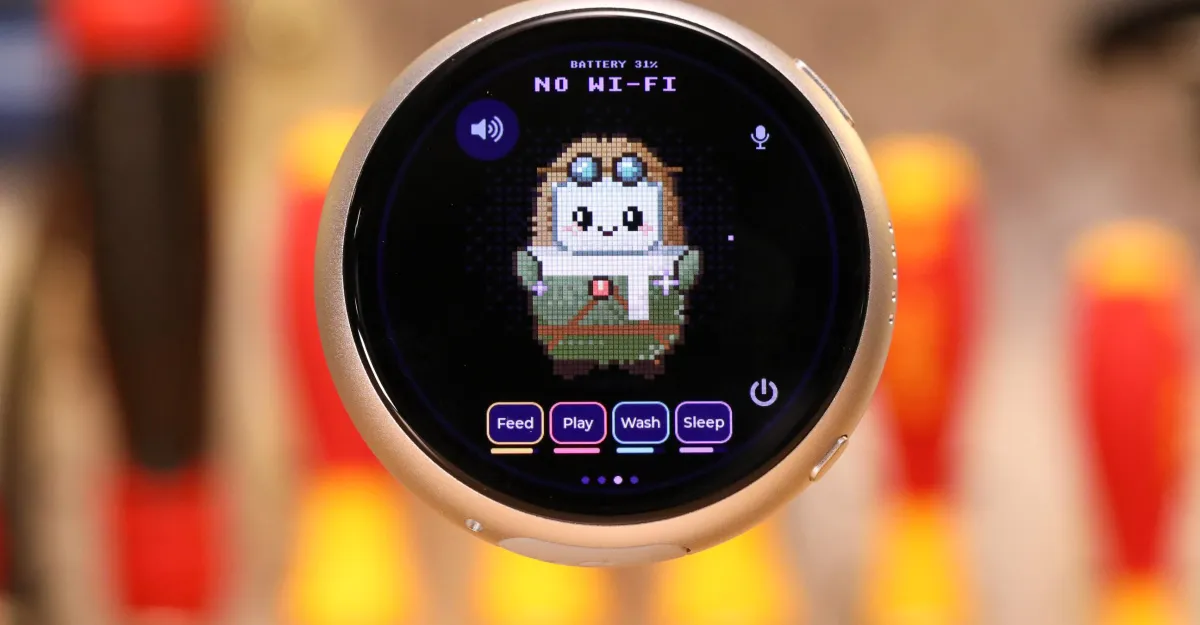
Mark Zuckerberg's Meta is selling a Muse Charm, a pendant AI companion that works like a Tamagotchi. The writer, who has no coding experience, built a homemade version instead. He bought a $50 Waveshare ESP32-S3 1.75C touchscreen device drop-shipped from China. Meta lists that hardware among suggested options for building a "Muse Gadget" that connects to its Muse AI cloud.
According to the writer, the device worked poorly after first setup. Muse initially treated spoken commands as audio clips to transcribe. Responses were slow, did not play aloud, and appeared only a few words at a time on the screen. The Meta build also shipped with one avatar and did not automatically find smart home devices.
The writer used Claude Code to add a conversation history page, a text-to-speech voice from ElevenLabs, a remote camera shutter, a Bluetooth camera preview, several avatars, a care minigame, a working clock face, and a video player. He reports that the audio fix involved sending only clips longer than one second. He says Meta's servers cause the remaining lag, which is sometimes slow and sometimes responsive.
The writer says he does not know whether the code is sound. He does not trust Meta or its Muse agent with his email or home network, so he placed the device on guest Wi-Fi. He also cites a reviewer whose home address reportedly leaked through the Muse agent.