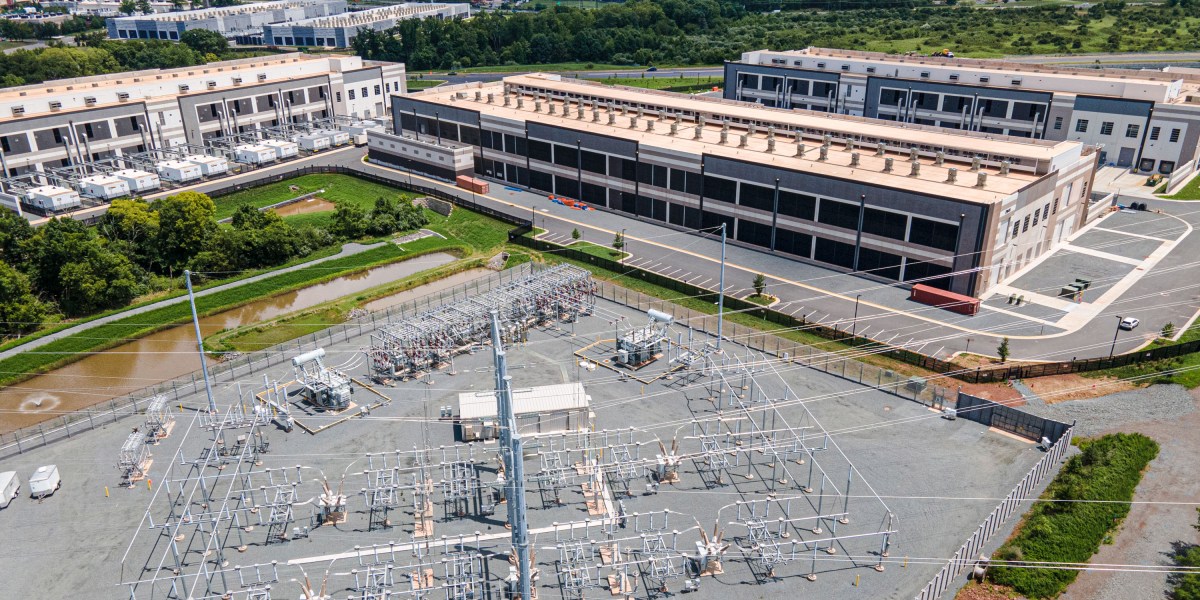
Big Tech wants the fight over data centers to be a culture war about progress, affordability and corporate power. OpenAI's chief global affairs officer, Chris Lehane, wrote that data centers have become a proxy for public unease. That framing is convenient, and the reporting from Ashburn, Virginia, suggests it misses the core problem. The objection there has been about power, in the literal sense of electricity, according to activist Elena Schlossberg, who says she is always banging her head against the wall when the industry calls it a culture war.
The Ashburn facilities mostly draw from the existing grid. The average data center in that part of Virginia has a capacity of 54 megawatts, more than the power draw of the Denver International Airport. Those demands have produced new state rules requiring data centers to pay fully for new transmission lines so the costs are not spread across other customers. Developers say they are preparing for rules that would cut them off from grid power during peak demand. Schlossberg worries that a strained grid could mean more diesel generators or more fossil fuel generation from Dominion Energy instead of renewables.
The bigger shift is elsewhere. The largest AI data centers are being planned in rural areas with little grid infrastructure, so they would bring their own natural-gas-powered turbines. One developer is eyeing a former steel mill for a 300-megawatt site, while the ideal facilities are around 6,000 megawatts, roughly the estimated draw of Chicago. Generating power at that scale is a serious local burden. Natural-gas turbines release air pollutants, diesel backup makes it worse, and the reporting notes that Elon Musk's company was reported by the Environmental Protection Agency to have violated air quality laws over turbines in Memphis.
Communities have long expected a say when public utilities build infrastructure this large. Private companies now build projects of similar scale with far less public input, and then act surprised by the resulting trepidation. Industry should stop treating the objection as a messaging problem. Regulators should require full public disclosure of onsite generation plans, binding air quality monitoring before construction begins, and the cost allocation rules Virginia has started to adopt. Local governments should be able to refuse projects whose power needs the surrounding region cannot absorb.
Other concerns, including job losses, misinformation about water use, and concentrated corporate power, are real and deserve answers. Electricity is still the most concrete one. Companies that want to build these facilities should accept that, and plan accordingly.