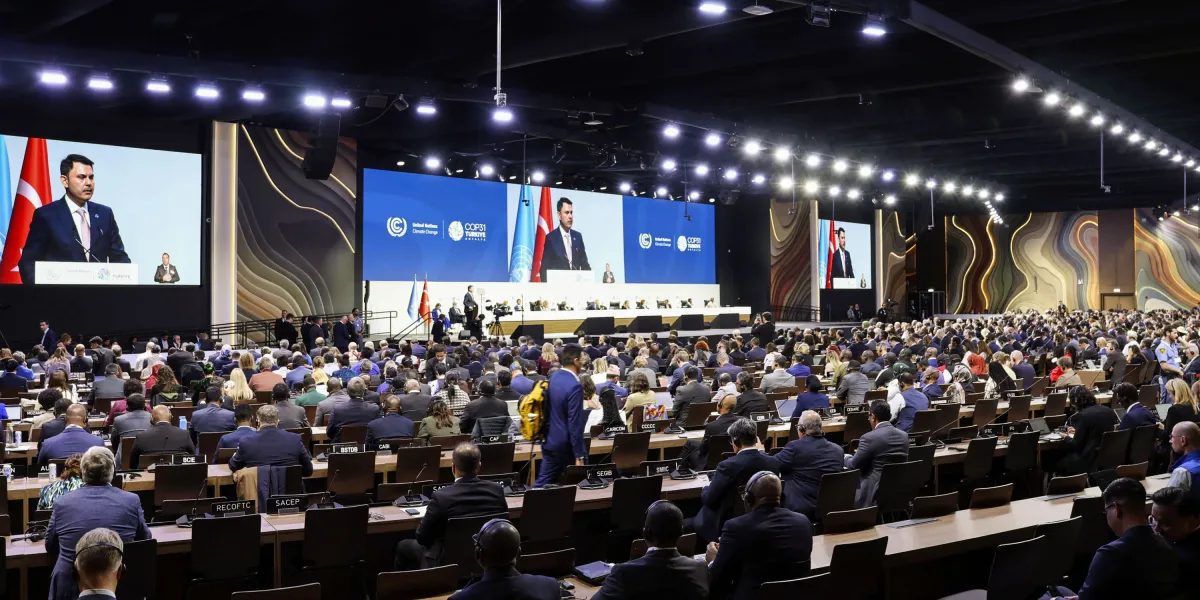
COP31 opens in Antalya, Turkey, with climate finance and fossil fuels at the top of the formal agenda. Turkey and Australia cohost the talks, which began November 8 and are scheduled to end November 20, according to MIT Technology Review.
The report says this year's talks come amid the ongoing war in Iran, which has disrupted the Middle East and pushed energy prices up. It also notes this will be the second COP without a formal US delegation. The report states that President Trump withdrew the country from the Paris Agreement earlier this year and is in the process of withdrawing from the UN Framework Convention on Climate Change.
The report cites a UN Environment Programme report from September that says global warming is set to exceed the 1.5 °C goal of the Paris Agreement "likely within the next few years." It states that talks two years ago set a goal of mobilizing $300 billion per year by 2035 for emissions cuts and adaptation. According to the Organization for Economic Cooperation and Development, rich nations provided $136.7 billion in 2024. The report says adaptation funding has been flat in recent years.
The report describes a glacier collapse in the Himalayas earlier this year that caused flooding. It says the flood killed approximately 1,500 people, left more than 5,000 missing, and caused nearly $5 billion in damage. The UN loss and damage fund committed $20 million to help Nepal recover, according to the report.
On fossil fuels, the report notes that the final text three years ago called for a transition away from them, while last year's agreement did not mention "fossil fuels." It says cohost Australia is a major exporter of coal and natural gas, and that Turkey's grid relies heavily on fossil fuels, including coal.
COP31 president Murat Kurum, Turkey's environment minister, is leading two informal initiatives. One is a voluntary pledge on making AI more sustainable, which the report says includes wording that creates no new obligations for countries. The other aims to raise electricity to 35% of total energy consumption by 2035. The report says electricity currently makes up about 23% of global energy use.