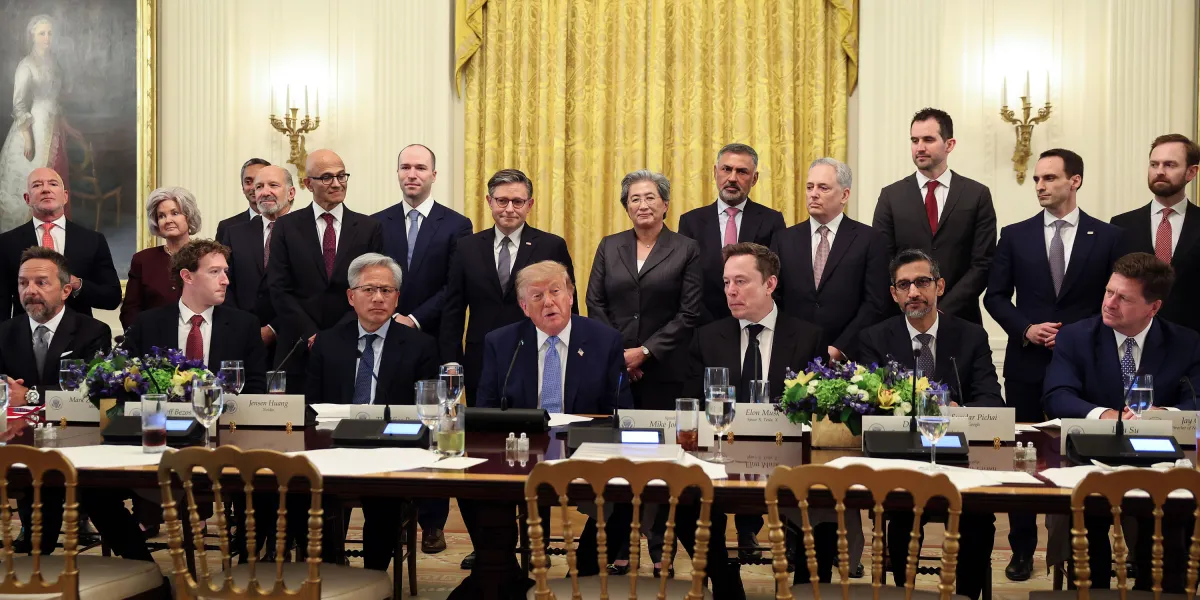
Aaron Zamost, a tech communications consultant and former Square executive, argues in a column that Silicon Valley leaders misjudged the political landscape before the midterm elections. He says Sam Altman, Elon Musk, Mark Zuckerberg and other tech leaders gathered at the White House about five weeks before the midterms, smiled for photos with President Trump and signed on to his "Super Intelligence" agenda. Zamost calls the decision "shockingly foolish" and says it cut against polls he describes as showing rising anti-Trump sentiment and bipartisan rejection of AI and data centers.
Zamost says tech workers he spoke with at OpenAI, Meta and other firms noted little commentary from leaders after the election. He reports that Zuckerberg had not addressed the results internally, and that an employee at another AI firm described leadership as "pretty silent on Slack." Zamost says employees are concerned about possible anti-data-center legislation.
He argues that by aligning with Trump, tech firms made AI a culture-war issue and tied key goals, including grid access and data center permits, to Democratic opposition. He contrasts this with large companies such as Chase and Boeing, which he says tend to avoid partisan alignment because their contracts outlast administrations. A Meta employee quoted in the column described Zuckerberg's approach as "spray and pray and see what happens."