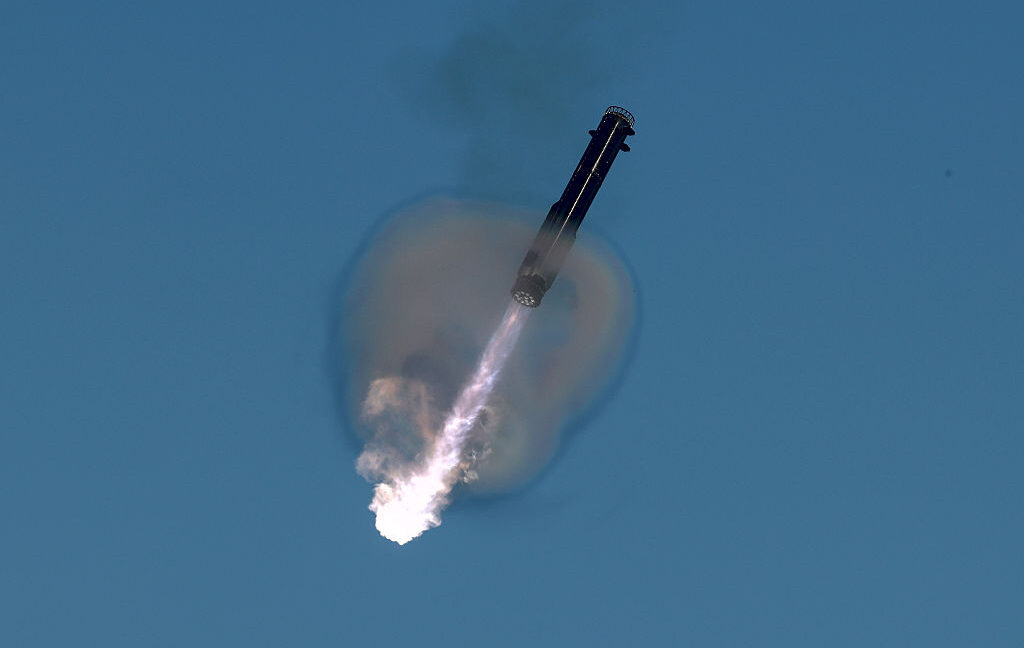
SpaceX launched Starship on its 15th test flight Friday from South Texas, according to Ars Technica. The launch took place in the early evening under calm winds, and the report describes it as largely successful.
The upper stage reached a nominal orbit after the first stage released it above the Gulf of Mexico. The report says this was the second time SpaceX has flown Starship into low-Earth orbit.
The first stage did not return as planned. The report says it was commanded to divert into the Gulf for an unspecified reason, rather than return to the Starbase launch tower for a catch, and it exploded on impact.
The primary goal, deploying 26 Starlink V3 satellites, appears to have been met. The report says all 26 reached orbit about 40 minutes into the flight and will use onboard propulsion to raise their altitude.
SpaceX hoped to return and reuse the first-stage booster. The report says the company has not yet done so with version 3 of the vehicle.
SpaceX may attempt to catch the upper stage on Saturday. The report says the upper stage must pass orbital and reentry health checks first. If it passes, it would land at Starbase at about 3:15 p.m. local time (21:15 UTC). If not, SpaceX has earlier options to de-orbit it into an ocean. The report says SpaceX has never attempted to catch an upper stage.
The report says heat shield performance remains a major challenge for rapid reuse. SpaceX said this flight includes additional tile retention mechanisms and a curved tile design that has reduced heating in the gaps between tiles.