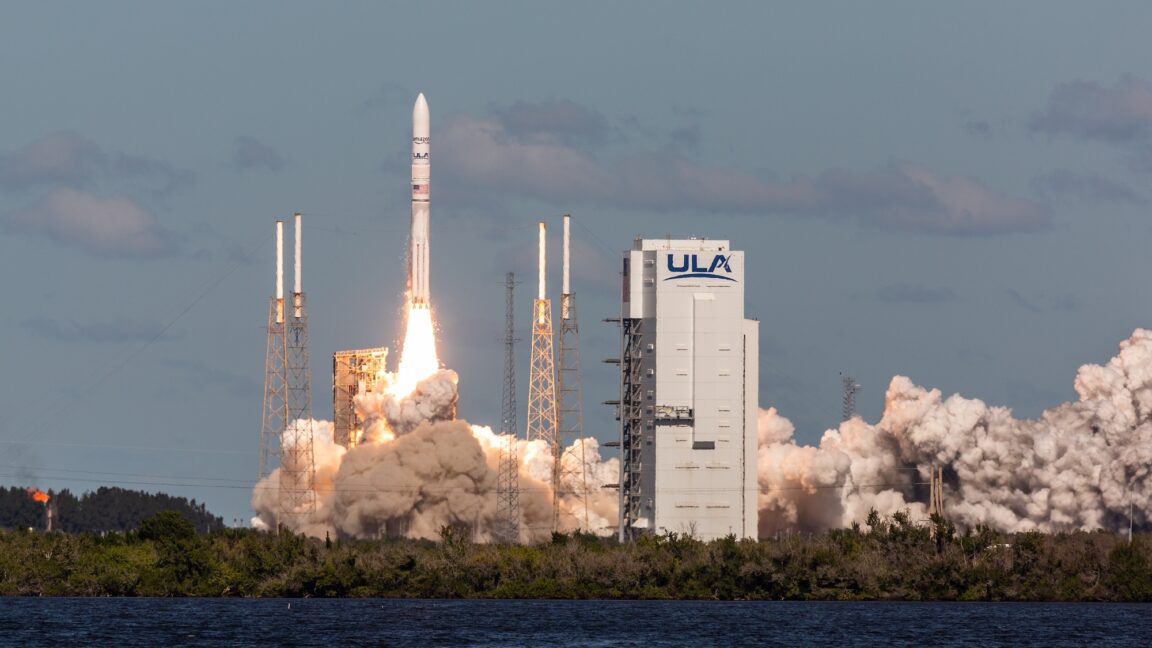
United Launch Alliance said Wednesday that inadequate fuel supply from the Vulcan rocket to its BE-4 engines caused the low booster thrust that led to Sunday's launch failure. The company said the engines themselves did not cause the problem.
ULA said the preliminary finding came from an initial integrated review of flight data from the Leo 1 launch anomaly. The company added that "work remains to determine cause."
Blue Origin, which builds the BE-4 engines, said it worked with ULA on the review. "Together, we identified that the low booster thrust was the result of inadequate fuel supply from the vehicle to the BE-4 engines, not from the performance of the engines," Blue Origin said in a statement. "ULA is a valued partner, and we look forward to Vulcan's return to flight."
The source reports that the finding confirms an earlier Ars Technica report from Tuesday. The article says the BE-4 engine is also used on Blue Origin's New Glenn rocket, which had a ground-test failure in May. That failure was later attributed to a main oxygen valve on one of the engines. The source says the retrofitted valve was not implicated in the Vulcan accident.
The source says Vulcan's upper stage, the Centaur V, also did not contribute to the failure.
The report states that Vulcan's fifth flight, on Sunday, was its first outright mission failure. Two earlier flights had problems involving the nozzles of the solid rocket boosters. ULA will be offline for several months while it addresses the propellant management and plumbing that feed liquid oxygen and methane to the BE-4 engines, according to the report.