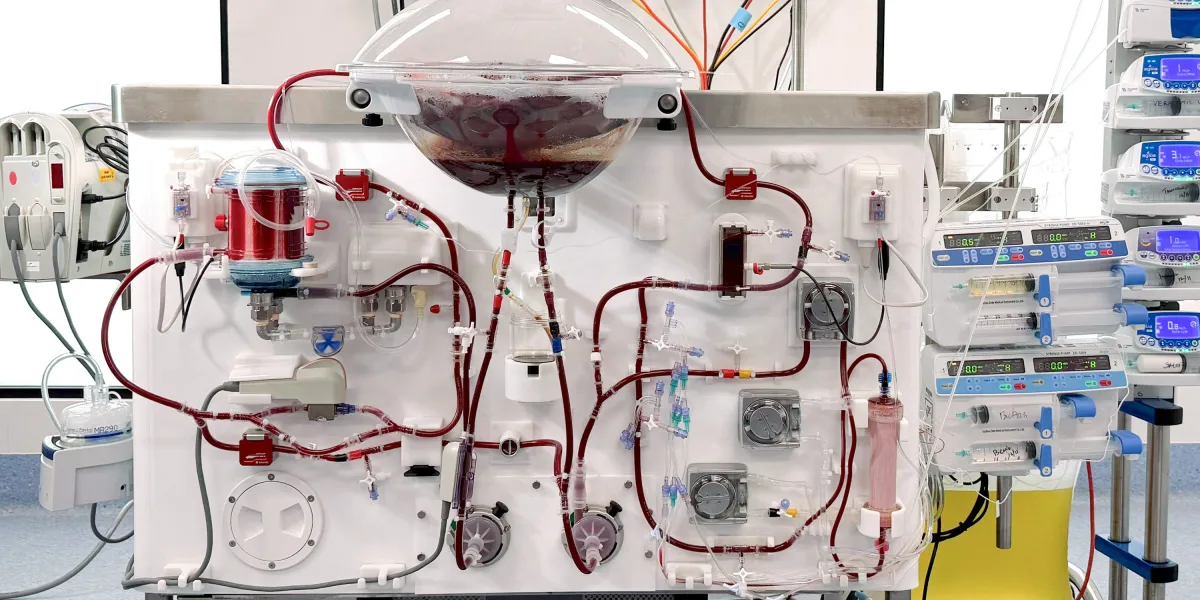
Researchers in Sydney say they kept a human liver alive outside the body for seven weeks, according to MIT Technology Review. The team was led by transplant surgeon Carlo Pulitano of Royal Prince Alfred Hospital and the University of Sydney. The organ was connected to an automated system of pumps and sensors, called the Extended Organ Perfusion System, that supplied nutrients and blood and removed waste at about body temperature.
Pulitano said the group is the only one to have maintained a human liver under these conditions for seven weeks. The details of the work have not yet been published. The previous record, set in Switzerland several years ago, was about two weeks for a liver.
Pulitano said automating the system was key. In a meeting in Switzerland earlier this year, the team described perfusing 55 human livers. For livers on the automated system, average survival time tripled to about four weeks.
The report notes that perfused organs may begin to repair themselves after a day or so. A Swiss team transplanted a liver that had been perfused for three days in 2022, according to Waldemar Hoffmann of Apersys. Pulitano's startup, Aeternum Life Technologies, will help with a planned Sydney trial that will transplant low-quality livers kept on perfusion for four days.
Hoffmann said the value of keeping an organ alive for nearly two months is unclear. He said experts believe the record is real but do not know how healthy the organ was at the end. Paulo Martins, a transplant doctor at the University of Oklahoma, said long-term perfusion could support future approaches such as organ manufacturing and direct experiments on human organs. Pulitano said the approach might one day help divide a donor liver into several organs, but he described this as something he has tried and not a proven method.