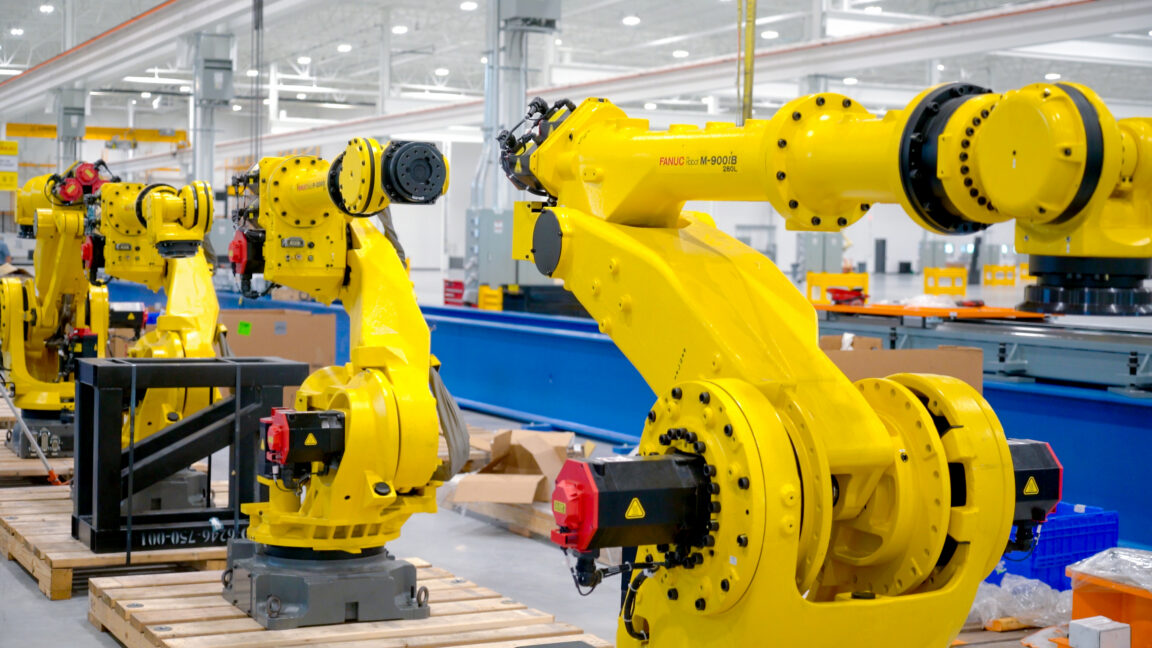
Trump has declared imports of foreign-made factory robots a national security threat, according to a presidential proclamation issued October 28. The proclamation orders negotiations with trading partners and says the president may impose new tariffs on these imports in the future.
The proclamation cites an investigation under Commerce Secretary Howard Lutnick. It says that investigation found imports of such robots "pose[] risks to the United States industrial base and threatens the long-term competitiveness of the United States in a sector that is increasingly vital to national security." The Commerce investigation also reportedly found "unique security and safety risks" and "significant cybersecurity vulnerabilities," according to the report.
The proclamation sets a 180-day deadline for new agreements. If none are reached, it warns the president may act further, including by imposing "tariffs, duties, quotas, and fees" on robotics, industrial machinery and their components. The report notes that US companies importing the robots would pay any tariffs or fees, which could raise US manufacturing costs.
The report says the proclamation's language resembles the reasoning behind a July FCC action. That action banned new models of foreign-made robotic vacuums, robot dogs and humanoid robots, but it exempted industrial robot arms and other fixed or stationary robots.
The report says General Motors, Ford, Tesla, Boeing and Lockheed Martin rely on such robots. It also says FANUC, ABB, Yaskawa and KUKA, based in Japan, Switzerland and Germany, supply many large robotic arms, and that no US company currently offers comparable heavy-duty hardware. The International Federation of Robotics reported nearly 38,500 new US industrial robot installations in 2025. The proclamation itself acknowledges that US robotics companies do not produce enough industrial robots to "meet national security needs."
The report also says that Intel recently obtained waivers allowing it to keep using foreign-made robots despite a nominal ban.