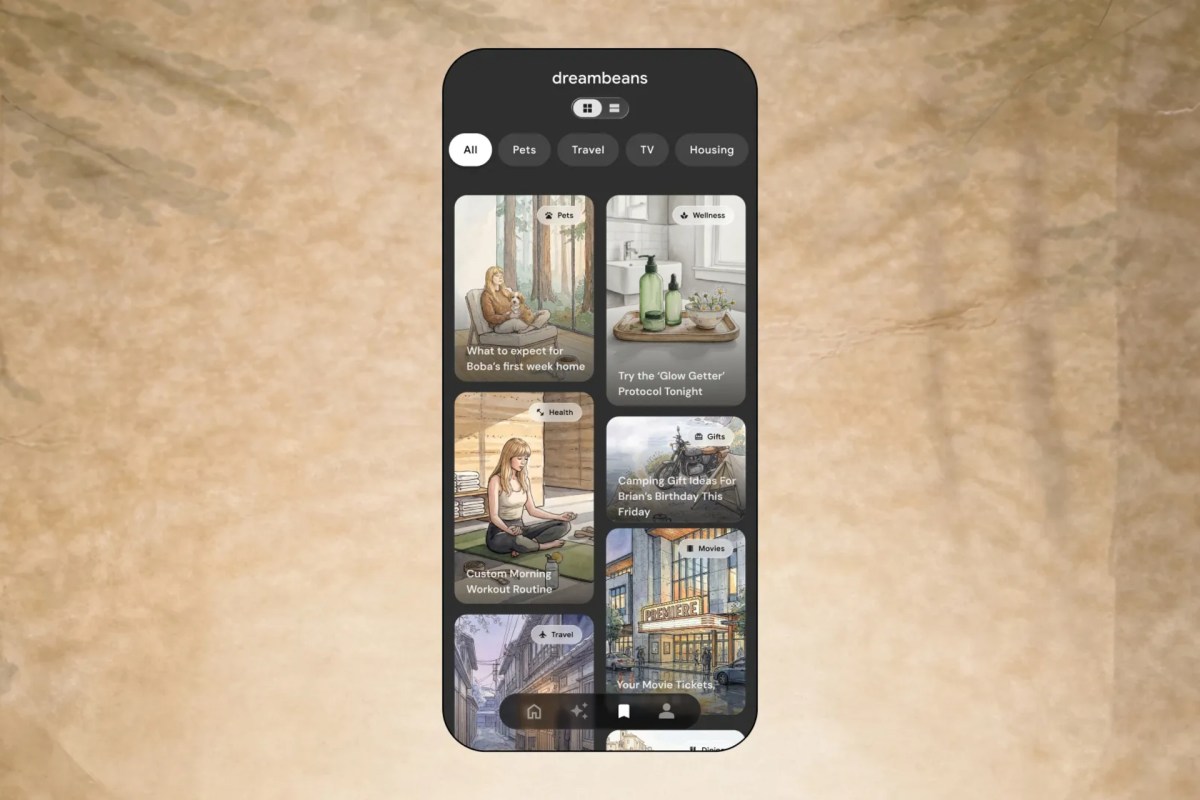
Google has taken its experimental app Dreambeans to India, its first market outside the United States. The app builds illustrated stories about users' interests and everyday lives by drawing on connected services including Calendar, Gemini, Gmail, Photos, Search, and YouTube, and it does so without a prompt. The pitch is convenience: the app anticipates what you care about. The price is access to a large share of your digital life.
Google's own explanation for choosing India is revealing. Oznur said the country stood out for its high overlap of users across Gemini, Gmail, and Google Photos. That overlap is precisely what makes the product both useful and worrying. The more services a person uses, the richer the personal portrait the app can paint, and the more sensitive material it can surface. Oznur acknowledged that Dreambeans could generate stories involving people who have died, a reminder that proactive personalization can resurface painful memories nobody asked to revisit.
Google points to real safeguards. Users can choose which services to connect, disconnect them at any time, delete their Dreambeans data, and tell the app to avoid certain subjects, including business-related information. Oznur also asserted that information deleted from the underlying services is removed from Dreambeans' personalization system, and that generated stories are visible only to the account holder. Those are reasonable controls on paper. Users should be able to verify that deletion really propagates, and Google should publish enough detail for independent scrutiny rather than relying on a product manager's briefing.
The app's commercial traction also deserves a sober look. Sensor Tower estimates put U.S. downloads at about 55,000 since June, with downloads falling 84 percent month over month to about 5,500 in October. Its first 30 days after opening to all eligible U.S. users drew an estimated 29,000 downloads, far behind general-purpose assistants. A product that many people are not yet choosing does not yet have the mass audience the company's rollout language implies. Expanding to India, with language support for 13 Indian languages plus English, may be an attempt to find that audience.
Yet the language limitation is a warning sign. Users can select only one language at a time, and the app cannot mix languages, even though many Indian users routinely blend Hindi and English. If Google wants Dreambeans to feel personal in India, it has to meet people in the way they actually speak. My recommendation is simple: before scaling further, Google should publish clear independent-facing details about data deletion, add mixed-language support, and make its privacy claims testable. Personal stories are only worth having if the people they describe remain in control of them.