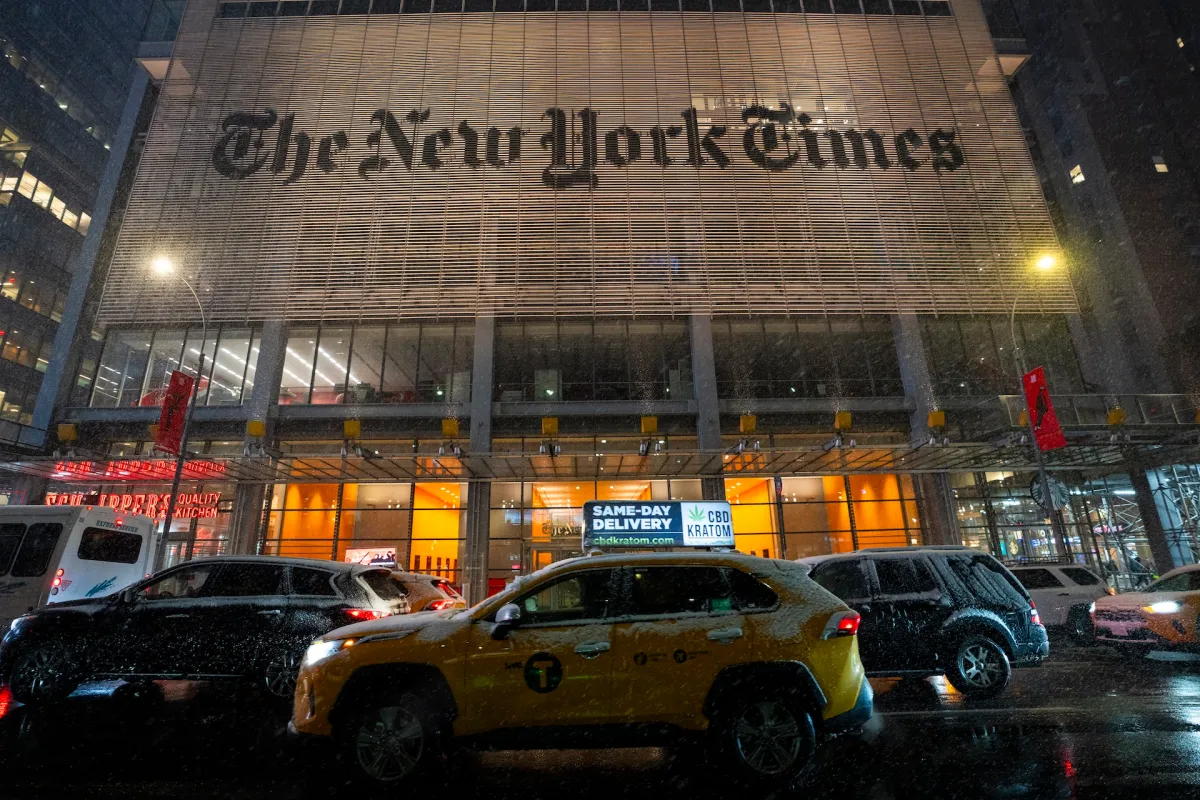
The New York Times Company has reportedly “entered exclusive negotiations” to acquire Letterboxd for $330 million, according to a report from The New York Times itself. That detail alone should give readers pause. A newsroom reporting on a potential purchase by its own parent company is an obvious conflict of interest, and the report does not explain how the paper handled it beyond noting that the company declined to comment.
The business case, as the report presents it, is easy to see. Letterboxd grew from 3 million users in January 2021 to 28 million by April of this year, and more than half of its users are under 35. That is a large, young, engaged audience for a company that describes itself as a platform for movie lovers, one that the report compares to Goodreads for film. A newspaper with a film criticism operation has a plausible reason to want that audience.
The numbers are harder to defend. Letterboxd is free to use, with paid subscriptions unlocking advanced features, and its projected earnings for this year are estimated at $15 million. The report notes that this is only about 4.5% of the price being discussed. A deal priced at more than twenty times projected annual earnings may be justified by growth or strategy, but the report offers no explanation of how the price was reached or what the buyer expects to recover from it.
The report also says film studios A24 and Sony were interested in acquiring Letterboxd, and that A24 was priced out. That fact matters. It suggests the price was set in a competitive process, yet the report does not say whether Sony remained a bidder or what terms the Times is reportedly offering beyond the headline figure. Readers are left to trust a single outlet on the most important numbers in the story.
The sensible next step is straightforward. The Times should disclose any internal review of the potential acquisition and how its editorial staff will cover Letterboxd and rival platforms if a deal closes. Letterboxd's users, many of them young, should be told how their data and community features would be handled under new ownership. Until the terms are confirmed and the conflicts are addressed, this remains a reported negotiation, not a settled transaction, and it should be treated that way.