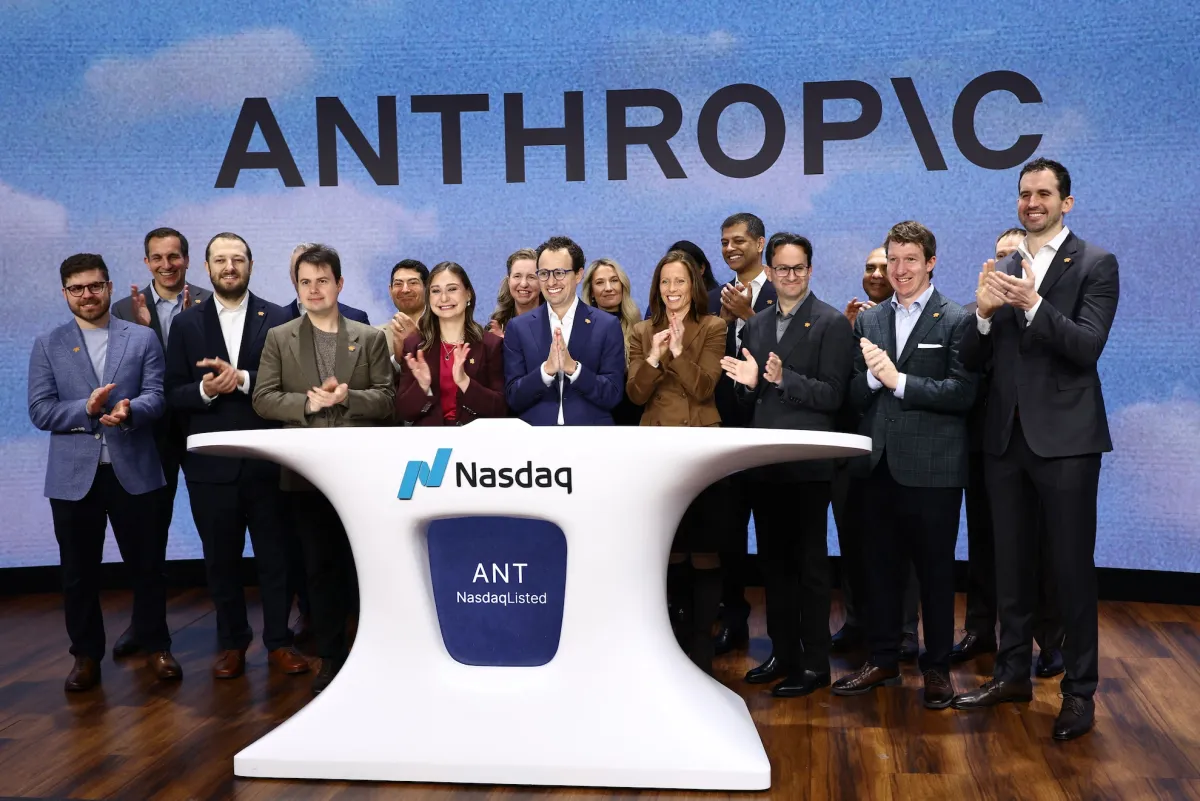
Notable Capital's bet on Anthropic has paid off dramatically. According to the report, the firm put roughly 10% of the U.S. portion of its fund into Anthropic's Series E at a $61.5 billion valuation, despite the company still trailing OpenAI and despite DeepSeek's R1 release weeks earlier. Notable's team said developers were using Claude 70% of the time, a reversal from the prior year. Less than two years later, Anthropic's $81.3 billion IPO reached a fully diluted valuation of about $1.5 trillion, a paper return of roughly 15 times for early backers.
The story is presented as a triumph of careful research, but the report itself shows how narrow the circle of winners is. Notable, GIC and Baillie Gifford were able to access rounds at escalating valuations, with GIC investing more than $4.5 billion across three rounds and Baillie Gifford putting in $1.5 billion. Those are sums few individuals or ordinary pension savers could ever commit. The gains that Notable's limited partners now celebrate were created inside private markets that most people cannot enter.
Some of the reasoning deserves scrutiny too. Tung said Notable believed "mission-critical" work would always require U.S.-based, closed-source models, a claim that serves the investors' thesis as much as it describes the market. Emanuel's account of a restaurant meeting and an early sense that Claude Code was popular is vivid, but it is anecdote, not disclosure. The report gives investors' accounts of their conviction without offering any independent test of whether the valuations reflect durable value.
What should happen next is more transparency. Regulators and pension trustees should examine how sovereign funds and asset managers with public obligations justify concentrated positions in frontier AI companies. Public listing now gives ordinary investors a chance to buy in, but the early-stage advantage that produced fifteen-fold returns remains limited to those with the capital and access to get in first. The windfall is real for its recipients. Whether the wider public shares in it is the question the report leaves unanswered.